State — Situation
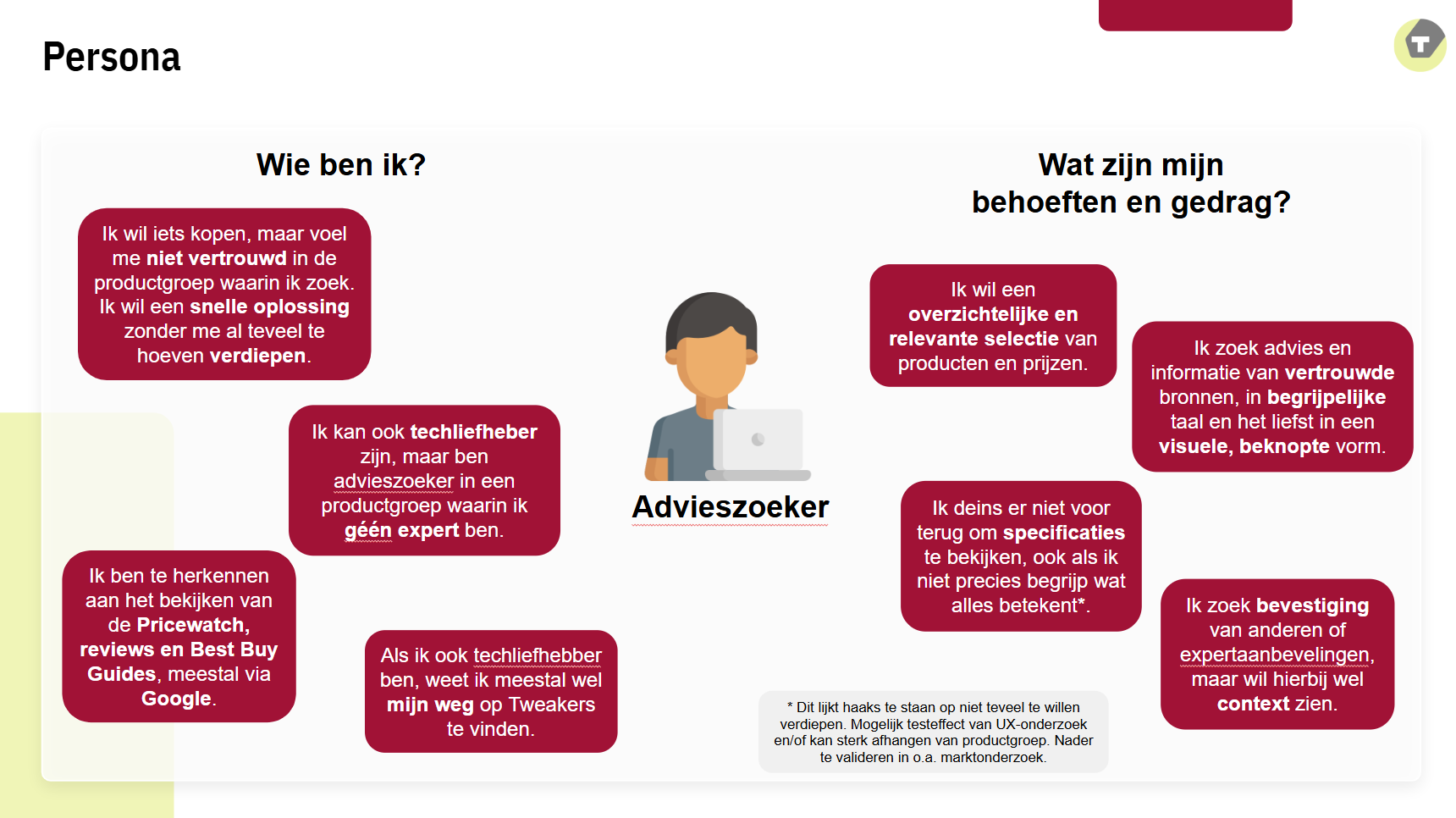
During my five‑month internship at Tweakers, the Product team faced a recurring challenge: users arrived at the product list page and were immediately overwhelmed by the large number of available items. Many users reached this page without any guidance, making it difficult to quickly find relevant products. Tweakers needed a way to filter and reduce the number of products shown on the product list page, and to separate user needs before showing the full list of results. This issue particularly affected different user types — especially the so‑called ‘Advice Seeker’, who was the primary focus of this challenge.
Explain
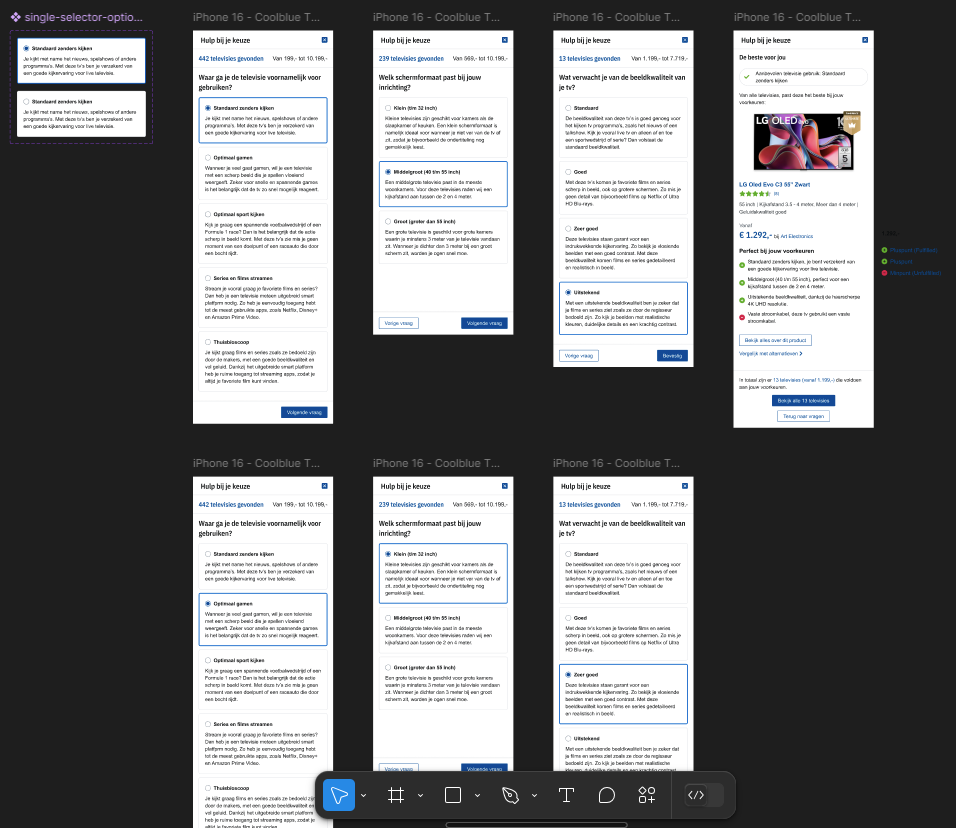
Tweakers asked me to help explore and design a solution that would reduce the number of visible products before reaching the product list page. To address this challenge, I designed a “(Product) Selection Guide” — a lightweight, decision‑support, onboarding flow placed before the product list page. The goal was to tailor the experience to two target groups/key audience segments:
• The 'Advice Seeker' (or the 'Advieszoeker' in Dutch): a newcomer who visits Tweakers less frequently and prefers simple, guided choices.
• The 'Tech Enthusiast' (or the 'Techliefhebber' in Dutch): a highly knowledgeable, and the more 'hardcore' Tweakers user, who enjoys exploring detailed specifications and advanced filters, so knows how the current UX of Tweakers works.
As a Product team with several UX-designers, we conducted a competitive and trend analysis (benchmark) to understand how other platforms approached this problem. Coolblue, for example, uses a similar guided selection flow, which provided valuable inspiration during our benchmarking phase.
Illustrate — Impact
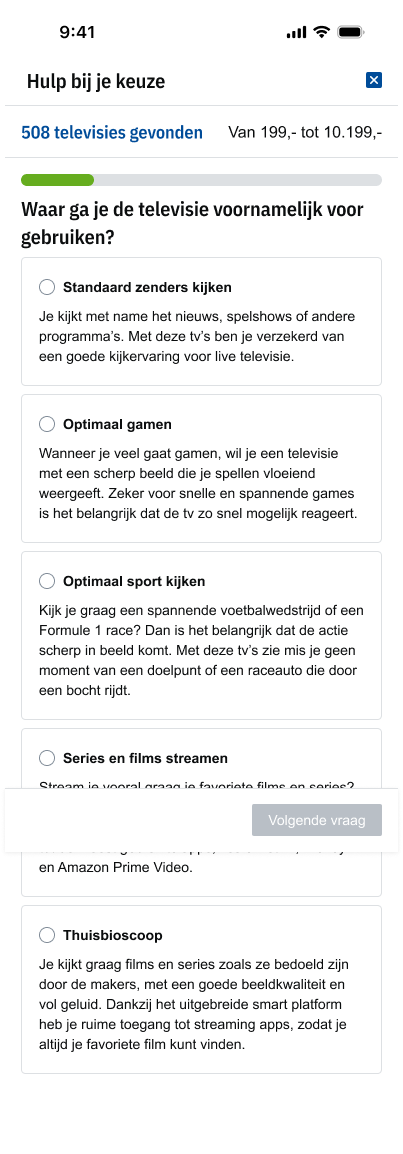
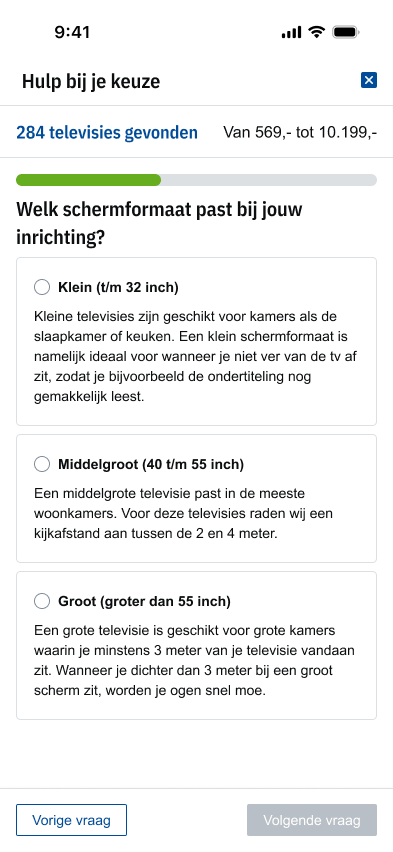
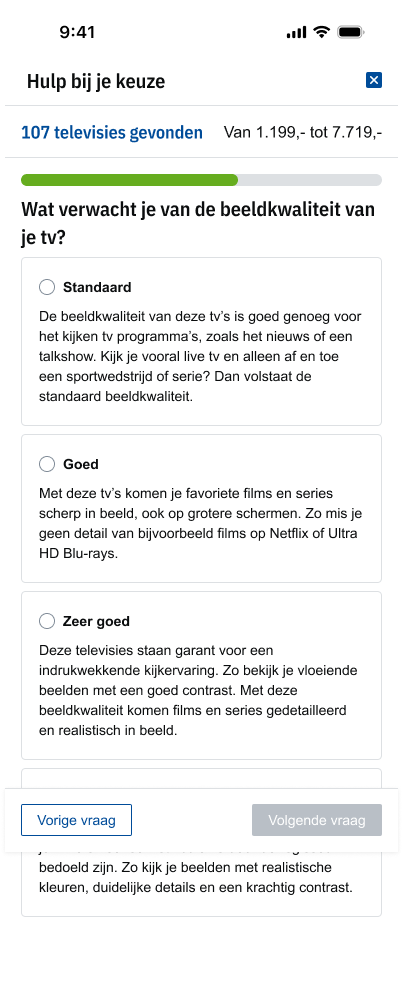
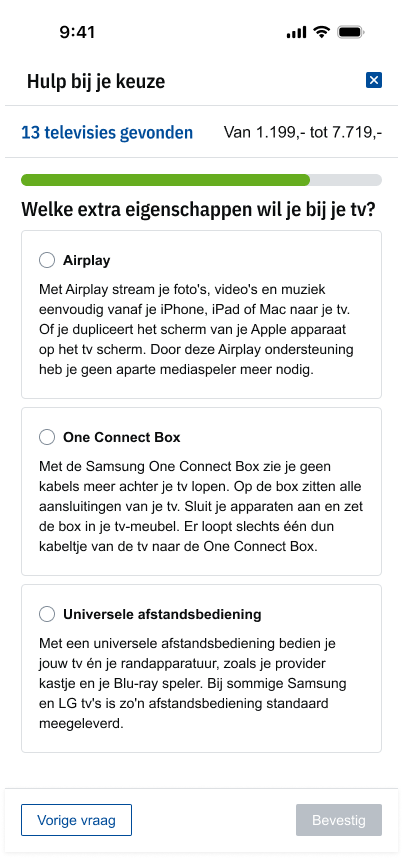
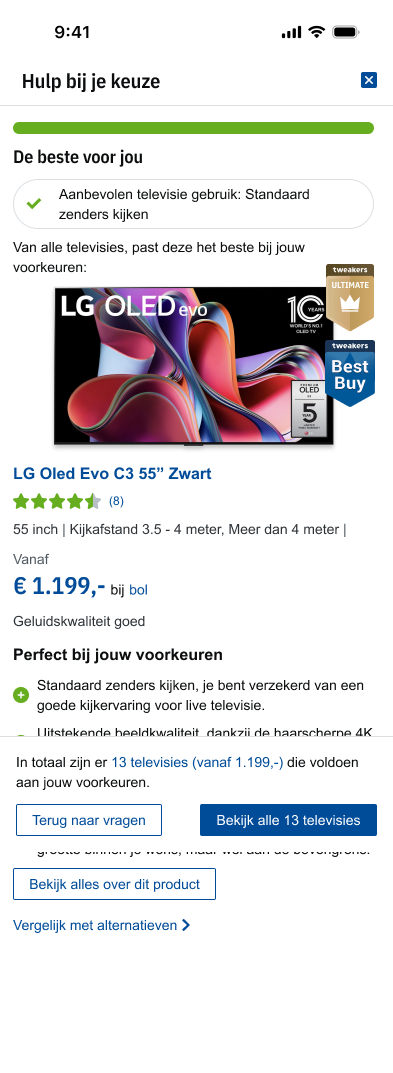
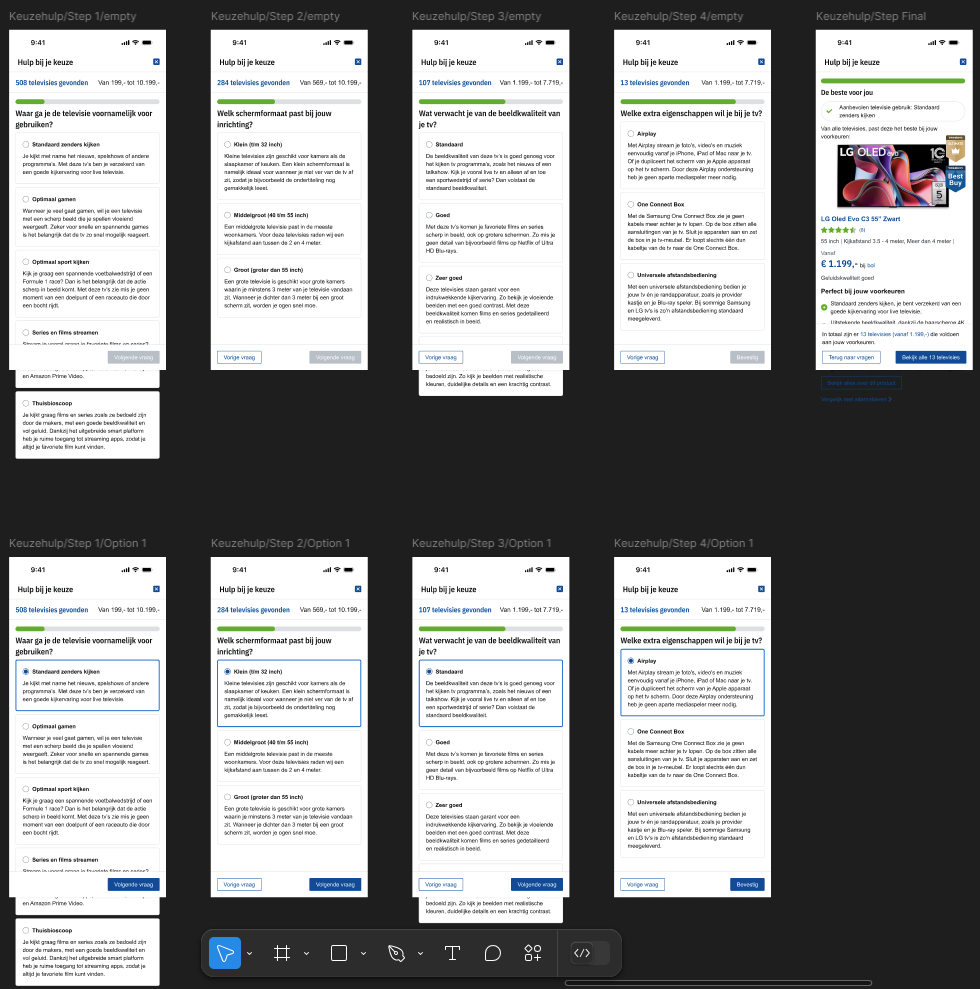
Above and below (with the interactive prototype flows) are two screenshots of the final result on mobile: a Figma prototype of the final concept, showing how the Product Selection Guide helps users narrow down their preferences before entering the product list page.
Throughout this prototype, I worked fully within Tweakers’ Design System, using only their components, styles, colors, variables, multiple variants and variant properties (for different states, and light and dark mode for example), and tokens to ensure a smooth handover to the Development team.
As a UX team, we drew inspiration from best‑in‑class examples and practices such as Coolblue, supported by a competitive analysis and benchmarking phase. The outcome is a more efficient, user-friendly flow that reduces cognitive load and improves product discovery for both user groups. So all in all, this solution creates a more efficient experience for both the 'Advice Seeker' and the 'Tech Enthusiast'.
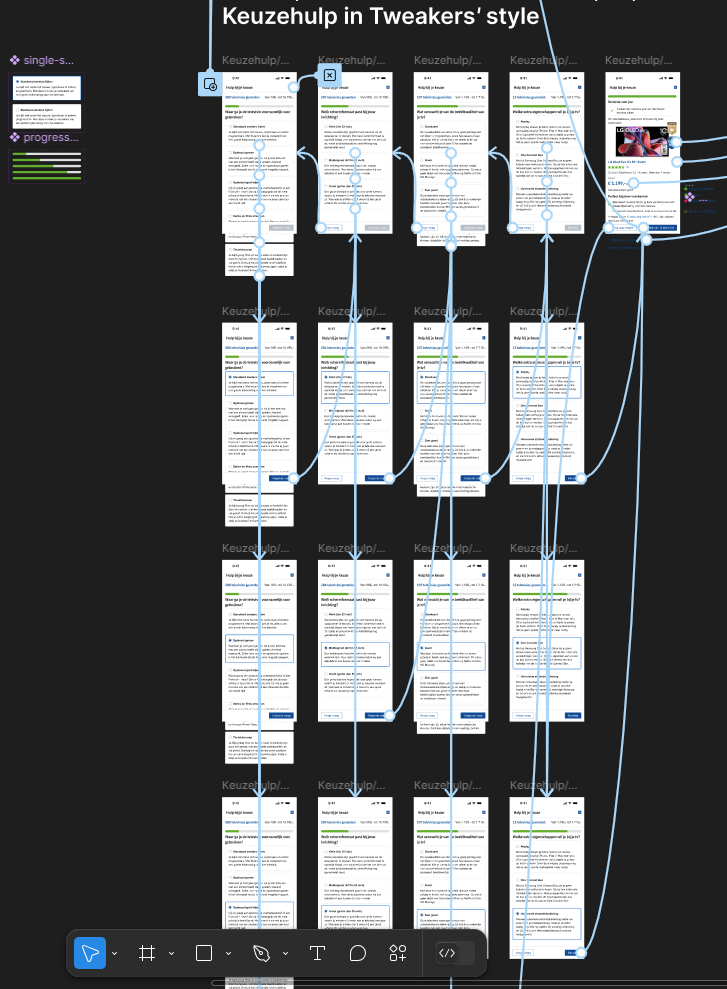
Below is the final iteration of the interactive Hi‑Fi prototype of the Product Selection Guide (or ‘Keuzehulpmenu’ in Dutch). This feature is hidden behind the ‘Help mij met kiezen’ (or ‘Help me (to) choose’ in English) button; when clicked, users are taken to the Product Selection Guide that I designed and prototyped. The prototype is embedded from Figma, so it's fully interactive and can be clicked through:
User Testing — Explorative Testing
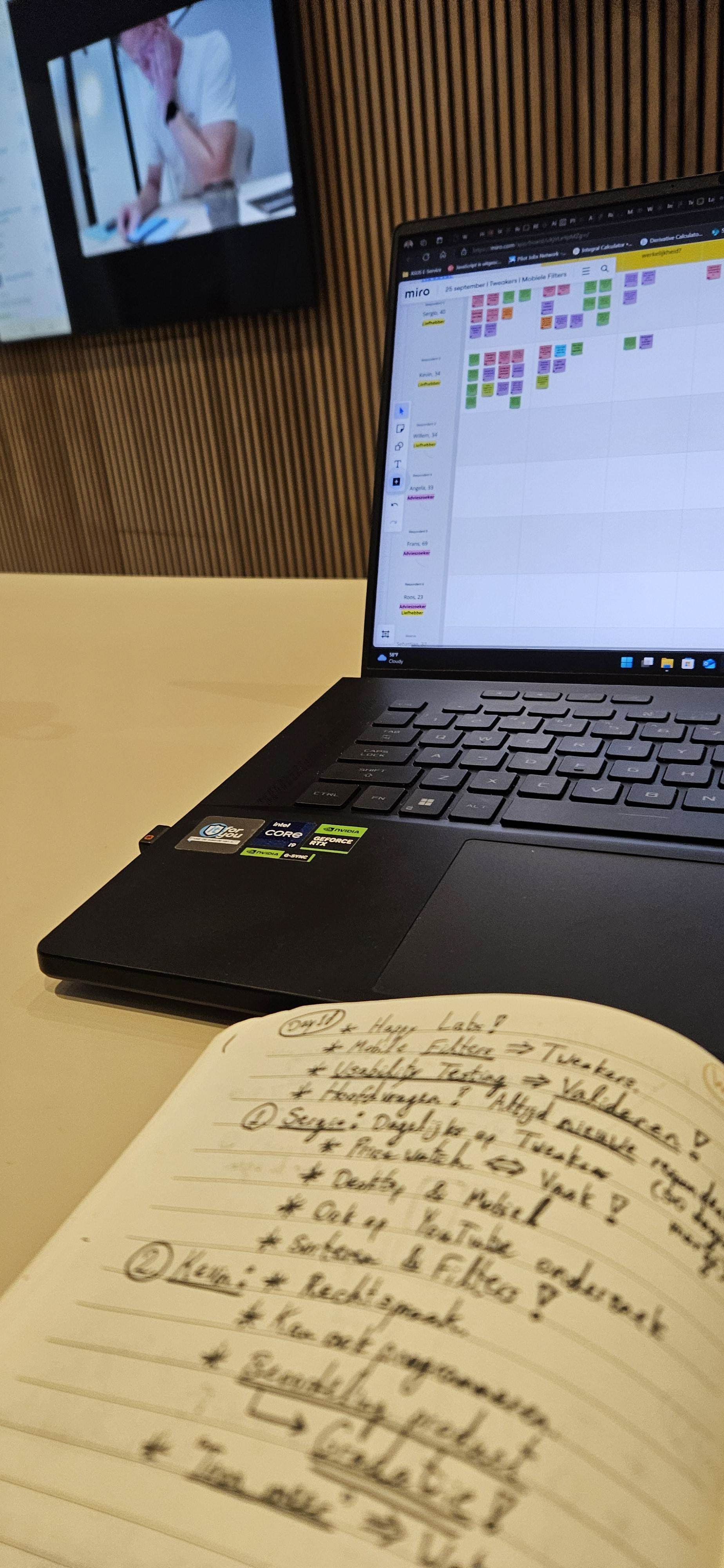
Next to this is a photo I took during a user test in which we evaluated the mobile filters (developed by the Product team before I joined Tweakers). The prototype we tested also included the Product Selection Guide (or 'Keuzehulpmenu' in Dutch) concept that I had designed and prototyped, fully integrated into the flow that we tested on that test day.
The Product Selection Guide was often found quickly, as it immediately stands out. This menu appears when users start searching for products within the Pricewatch page. This was a successful validation of the concept, showing a clear distinction in user behavior between the two key audiences segments: the 'Advice Seeker' (or the 'Advieszoeker' in Dutch) and the 'Tech Enthusiast' (or the 'Techliefhebber' in Dutch).
All test participants were selected in collaboration with Happy Labs (located in Amsterdam, formerly founded by Valsplat) based on their relationship with Tweakers, which is why the ratio was 50% 'Advice Seekers' and 50% 'Tech Enthusiasts'.